

Your eight-year-old grabs the last cookie while her younger brother is mid-sentence asking for it. He cries. She looks genuinely puzzled by his reaction, then frustrated that he is upset at her. You have seen this scene a hundred times, in different costumes. The shoes by the door. The interrupted bedtime story. The friend at the park who walks away mid-game.
It can be tempting to read these moments as a sign that your child does not care. Most of the time, that reading is wrong.
Children with ADHD often feel deeply. What they struggle with is the pause, the noticing, the shift in attention that empathy quietly requires. That distinction matters because it changes what you do next. Instead of trying to install a missing trait, you are helping a feeling child build the skills that let empathy actually show up in everyday moments.
What Empathy Looks Like When ADHD Is in the Mix
Empathy has a few moving parts. There is the cognitive side, recognizing what someone else might be feeling. There is the emotional side, sharing a bit of that feeling yourself. And there is the response, doing or saying something that fits.
ADHD can interrupt any of those steps. A child may miss a friend’s face falling because their attention was already pulled toward something louder. They may feel the emotion intensely once they notice it, then act impulsively before thinking about what would help. They may also be flooded by their own big feelings, which leaves less bandwidth for someone else’s.
This is part of why parents sometimes describe their ADHD child as “the kindest kid in the world, except when she’s not.” Both are true. The skill of being empathic is less about having a soft heart and more about the working-memory and attention-shifting muscles that let the heart catch up in real time.
It also helps to know that empathy develops on a long arc through childhood and adolescence. ADHD does not freeze that development. It changes the pace and the pattern.
Start With Naming, Not Lecturing
When your child does something that lands badly on a sibling or friend, the instinct is often to explain why it was wrong. With ADHD kids, long explanations tend to slide off. Their nervous system is already busy.
Try shrinking the moment instead.
Name the other person’s feeling out loud, in plain language. “Look at his face. He looks really disappointed.” Then stop. Give your child a beat to absorb it. You are not asking them to apologize yet. You are pointing a flashlight at the thing they missed.
Over time, this builds the noticing habit. A few useful phrasings to keep in your pocket:
- “Her shoulders dropped when you said that. I think it stung.”
- “He stopped playing. Something shifted for him.”
- “Your sister got quiet. What do you think happened?”
Short. Specific. Curious instead of accusing.
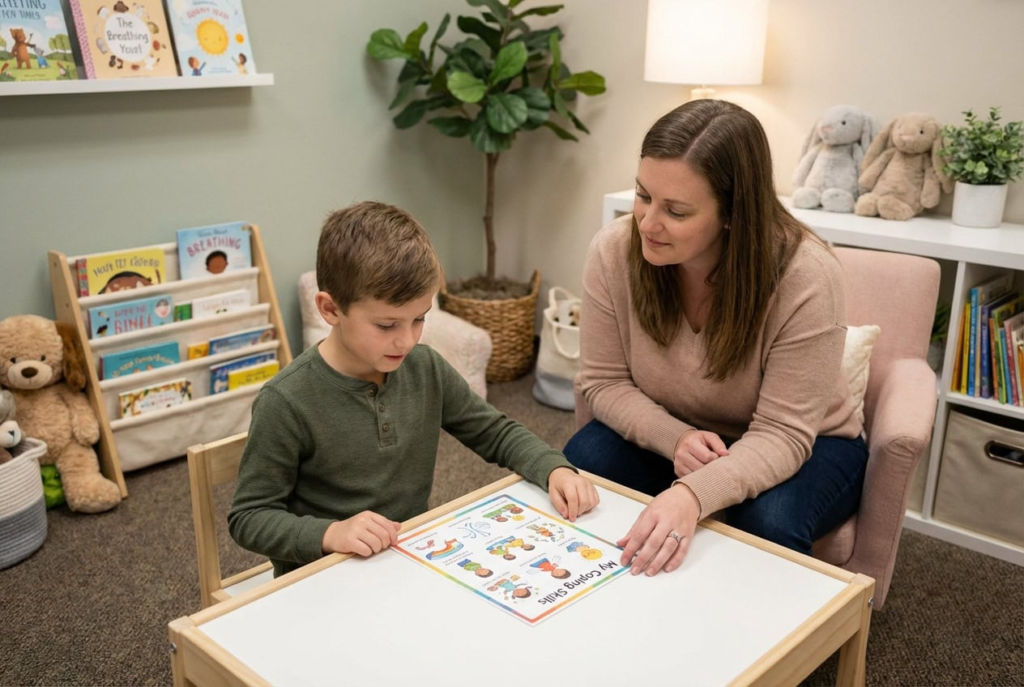
Use the Calm Times to Build the Skill
Empathy lessons rarely land in the middle of a meltdown, theirs or anyone else’s. The teaching happens in the quiet windows, the car ride home, the few minutes before lights out, the walk to school.
Bring up small moments from earlier in the day or from a book or show you both watched. “Remember when that character didn’t get picked for the team? What do you think she was feeling?” Then add a layer: “Has that ever happened to you?”
You are doing two things at once. You are practicing perspective-taking when no one is upset and the stakes are low. You are also linking their own remembered feelings to someone else’s situation, which is how emotional understanding deepens.
Stories, shows, and even short videos are useful here. Pause and wonder out loud. Kids with ADHD often do better with vivid, concrete examples than with abstract talks about kindness.
Help Them Recognize Their Own Feelings First
It is hard to read someone else’s emotional weather when your own is a constant storm. Many ADHD kids struggle to label what they themselves feel, especially the in-between states, frustrated, overwhelmed, embarrassed, left out.
Building an everyday feelings vocabulary helps. Some families keep a simple chart on the fridge. Others just narrate.
- “You seem revved up. Excited or frustrated?”
- “Your body looks tight. Sometimes that means you’re worried.”
- “That was a big disappointment. Makes sense you slammed the door, even though we still need to fix that.”
When a child can name their own internal weather, recognizing it in someone else becomes much easier. The inside and the outside start to match up.

Coach Repair, Not Just Apology
A forced “say sorry” rarely teaches empathy. It teaches kids that the magic word makes adults stop being upset.
Repair is different. Repair asks: what does the other person need now?
After things have cooled, walk through it together. Keep it concrete.
- What happened from your side?
- What do you think happened from theirs?
- What might help them feel better?
Sometimes the answer is words. Sometimes it is drawing a small picture, sharing the toy back, sitting next to the person quietly, or letting them pick the next show. The point is that your child does something that reconnects them with the person they hurt. That is the muscle you are building.
This also gives you a natural place to talk about empathy as a skill that grows. Research on social and emotional learning consistently points to practice and reflection, not lectures, as the engine of change.
Manage the Conditions, Not Just the Moments
A tired, hungry, overstimulated child cannot access empathy well. Neither can most adults. With ADHD, those thresholds can be lower and the recovery slower.
A few household conditions tend to make empathy easier to reach:
- Predictable sleep, even on weekends.
- Protein-forward meals and snacks that hold steady, rather than long stretches of running on fumes.
- Movement breaks built into long stretches of expected stillness.
- Quiet recovery time after big social events instead of stacking more on top.
You are not removing the work of teaching empathy. You are removing some of the static that drowns it out.
If your child is on ADHD treatment, talk with their clinician about how attention and emotional regulation are showing up across the day. The goal is not to medicate kindness into a child. It is to make sure they have a fair chance at accessing the skills they are working on.
When to Loop in a Professional
Most empathy lags in ADHD kids respond, slowly, to consistent coaching at home and at school. Sometimes more support is helpful.
Consider checking in with your pediatrician, a child therapist, or your child’s school counselor if you notice:
- Frequent aggression toward people or animals that does not soften with age.
- Persistent difficulty making or keeping any friendships.
- A pattern of seeming genuinely confused by other people’s feelings, not just slow to notice.
- Big emotional dysregulation that is not improving with the strategies you are trying.
A professional can help sort what is developmental, what is ADHD-specific, and what might benefit from a closer look, including whether co-occurring conditions are part of the picture. Asking for that input is not a sign that something is wrong with your parenting. It is part of how you stay in the loop.
A Realistic Picture of Progress
Parents often hope for a moment where their child “gets it.” More often, growth looks like a slightly shorter delay between the misstep and the noticing. A spontaneous “are you okay?” that would not have come a year ago. A small gesture toward a sibling who is upset.
What to do when a child struggles with ADHD and lack of empathy is, in the end, less about a dramatic transformation and more about hundreds of small, repeatable moments where you name feelings, slow things down, and coach repair. Your steadiness is teaching as much as your words.
Some days will not look like progress. That is fair. The arc still moves, even when it is hard to see from inside the week.
You are not raising a child who lacks heart. You are raising one whose heart sometimes needs a beat to catch up. With practice, it usually does.
Safety Disclaimer
If you or someone you love is in crisis, call 911 or go to the nearest emergency room. You can also call or text 988, or chat via 988lifeline.org to reach the Suicide & Crisis Lifeline. Support is free, confidential, and available 24/7.
Author Bio
Earl Wagner is a health content strategist focused on behavioural systems, clinical communication, and data-informed healthcare education.
 Admin
Admin